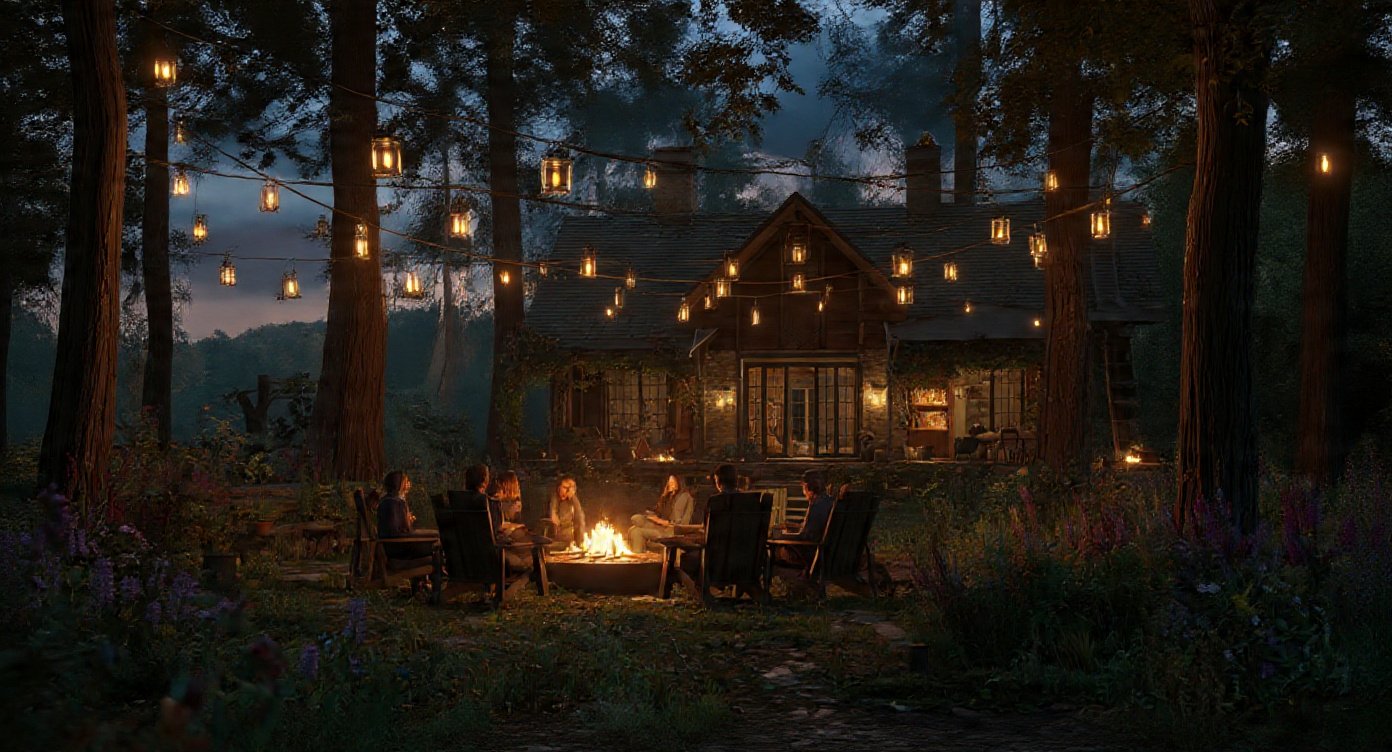
April 30th and May 1st — history, folklore, and modern celebration of the fire festival at the hinge of the wheel of the year.
Exactly opposite Samhain on the wheel of the year sits one of the most ancient and layered celebrations in European folk tradition. April 30th and May 1st mark the hinge between the dark and light halves of the year — a threshold moment that has been honored, feared, renamed, and reimagined for thousands of years across Celtic, Germanic, Scandinavian, and Christian cultures.
These are not two separate holidays that happen to share a weekend. They are two faces of the same fire.
Walpurgis Night occurs exactly half a year before Halloween — and in central Europe, it is the spookiest night of the year.
🔥 April 30th — Walpurgisnacht
Germanic roots: Hexennacht
In the Germanic tradition, the night of April 30th was known as Hexennacht — Witches' Night. Folklore held that on this night, witches gathered on mountaintops to meet and revel before the arrival of summer. The most famous gathering place was the Brocken, the highest peak in the Harz Mountains of northern Germany — a place so associated with this night that Goethe immortalized it in Faust.
Communities responded with fire, noise, and ritual. Enormous bonfires were lit on hilltops. People banged pots, cracked whips, and rang bells. The intent was protection — to drive away the roaming spirits before the warmth of summer sealed the veil shut again.
The saint's story
Saint Walpurga was a real historical figure: an 8th-century English nun and Christian missionary who traveled to Germany, founded the double monastery at Heidenheim, and became renowned for her healing powers — particularly her ability to protect people from witchcraft. She died around 779, and her relics were moved to Eichstätt on May 1st, 870, when she was canonized by Pope Adrian II.
The Church chose this date deliberately. It was already a sacred night in the folk calendar. By placing Walpurga's feast on May 1st, the old fire festival was folded into Christian observance — but the bonfires never really went out.
How it's celebrated in Europe today
The most robust modern celebrations, with costumed witches, massive bonfires, music, and dancing in towns throughout the Harz Mountains.
A beloved spring celebration especially at universities — bonfires, choral singing, and welcoming the arrival of spring with great community joy.
One of the biggest celebrations of the year — students don white graduation caps, sparkling wine flows, and outdoor picnics fill the parks on May 1st.
Effigies of witches are burned in bonfires to symbolically drive away evil, with festivals and music throughout the night.
🌸 May 1st — Beltane
Beltane is one of the four great Celtic fire festivals, sitting at the exact midpoint between the spring equinox and the summer solstice. For the ancient Celts, this was the beginning of summer — the season of growth, abundance, fertility, and life in full expression.
The sacred fires
Central to Beltane was the need-fire — a new fire kindled from scratch through friction, without spark or ember carried from another source. All household fires in the community would be extinguished and relit from this single sacred flame. Cattle were driven between two Beltane fires to bless and protect them for the season ahead. To pass between the fires was to be purified and renewed.
Maypoles, flowers, and the May Queen
The Maypole — a tall pole festooned with ribbons, flowers, and greenery — was erected as a symbol of the axis of the world, the union of earth and sky, and the fertile energy of the season. Communities danced the ribbons into intricate patterns around the pole. The May Queen was crowned with flowers, a living embodiment of the goddess of spring.
Flowers were woven into every part of Beltane. Doorways were decorated with hawthorn blossoms — the sacred May tree — flower crowns were worn, and petals were scattered across thresholds to invite blessing into the home.
The thinning of the veil
Like Samhain, Beltane was understood as a liminal time — a crack between the worlds. The Fair Folk were said to be especially active, and both caution and reverence were called for. Offerings were left at wells and standing stones. Protective charms were woven into doorways. The boundary between the seen and unseen worlds felt thinner, and people moved through the day with awareness of what else might be present.
The ancients didn't celebrate these days because they had nothing else to do. They celebrated them because they understood that the earth moves in cycles — and that honoring those cycles is what keeps us rooted.
✝ Shared History — How Christians Honor These Days
One of the most fascinating threads running through this season is how deeply the Christian calendar is woven into the older pagan one — not by accident, but by design. The Church understood that you cannot simply erase a sacred date from the hearts of a people. Instead, you give it a new name and let the old roots remain.
The Feast of Saint Walpurga
May 1st is the official Feast of Saint Walpurga in the Catholic and some Anglican traditions. To this day, pilgrims travel to her shrine at the Abbey of Saint Walburga in Eichstätt, Germany, where her relics are kept. Vials of what is known as Walpurgis Oil — oil that seeps from the stone surrounding her tomb — are considered sacred and distributed to the faithful as a healing grace.
The Feast of Saints Philip and James
May 1st also holds the Catholic feast of Saints Philip and James the Apostle, deliberately placed on this date in the early Church calendar to Christianize the existing May Day celebrations. This is still observed in the Catholic, Anglican, and some Lutheran traditions.
May as Mary's Month
In Catholic tradition, the entire month of May is dedicated to the Blessed Virgin Mary — itself a beautiful parallel to the old reverence for the goddess of spring and fertility. May altars crowned with flowers, May crownings in churches, the Rosary, and outdoor processions honoring Mary all echo the older tradition of honoring the sacred feminine as the earth comes into full bloom. The flowers on the church altar and the flowers on the Beltane threshold are not so far apart.
What this means for us
Whether you come to this season from a pagan path, a Christian one, a secular curiosity, or some layered combination of all three — these days belong to you. The fire has always been for everyone. The names have changed. The longing beneath them hasn't.
🕯️ Modern Practice — Celebrating Without a Bonfire
Let's be honest. Most of us are not standing in a field at midnight with a pile of wood and a flint. Some of us are in apartments so new the paint is still curing, in buildings where a Yankee Candle requires risk assessment. The tradition of Beltane fire is thousands of years old. But so is the tradition of working with what you have.
Intention has always been the real magic. The fire is a tool — not the point. Here are ways to honor the season wherever you are:
-
🕯️
Build a candle altar Gather as many candles as feels right — different heights, different whites and golds and reds. Light them all at once at dusk on April 30th and let them be your fire. Sit with them. Watch the flames. That's the ritual.
-
🌸
Flower your threshold Fresh flowers at your front door or on your windowsill is one of the oldest Beltane practices there is. Hawthorn, if you can find it. Whatever is blooming near you. This is both beautiful and protective — a welcome to the season.
-
🃏
Pull cards for the light half of the year Beltane is a threshold. What are you carrying into the season ahead? What do you want to grow? Pull 1–3 cards as an intention-setting ritual. No elaborate spread required.
-
🪟
Open your windows on Walpurgisnacht Let the night air of April 30th move through your space. Smudge or use a room spray if you want to cleanse first. Then let the fresh air in. Simple and powerful.
-
🍯
Make or gather an offering Honey, milk, bread, herbs, flowers — leave something beautiful outside your door or on a windowsill as an offering to the season and the spirits of the threshold. Acknowledge that something is turning.
-
🌿
Step outside at midnight Even just your balcony, stoop, or a short walk. Look at the sky. Feel the air. Notice what's blooming. The ancients marked these days by going outside and paying attention. We can do the same.
-
✍️
Write what you're ready to release Fire was used to transform and release. In the absence of an actual fire, write what you want to let go of and tear the paper mindfully. Or use a fireproof bowl and a single match if your balcony allows it.
The wheel of the year doesn't require a mountain or a field or even a fire pit. It requires only that you show up, pay attention, and remember — in whatever way feels true to you — that the earth is alive, and so are you.
🔥 Happy Walpurgisnacht & Blessed Beltane 🌸