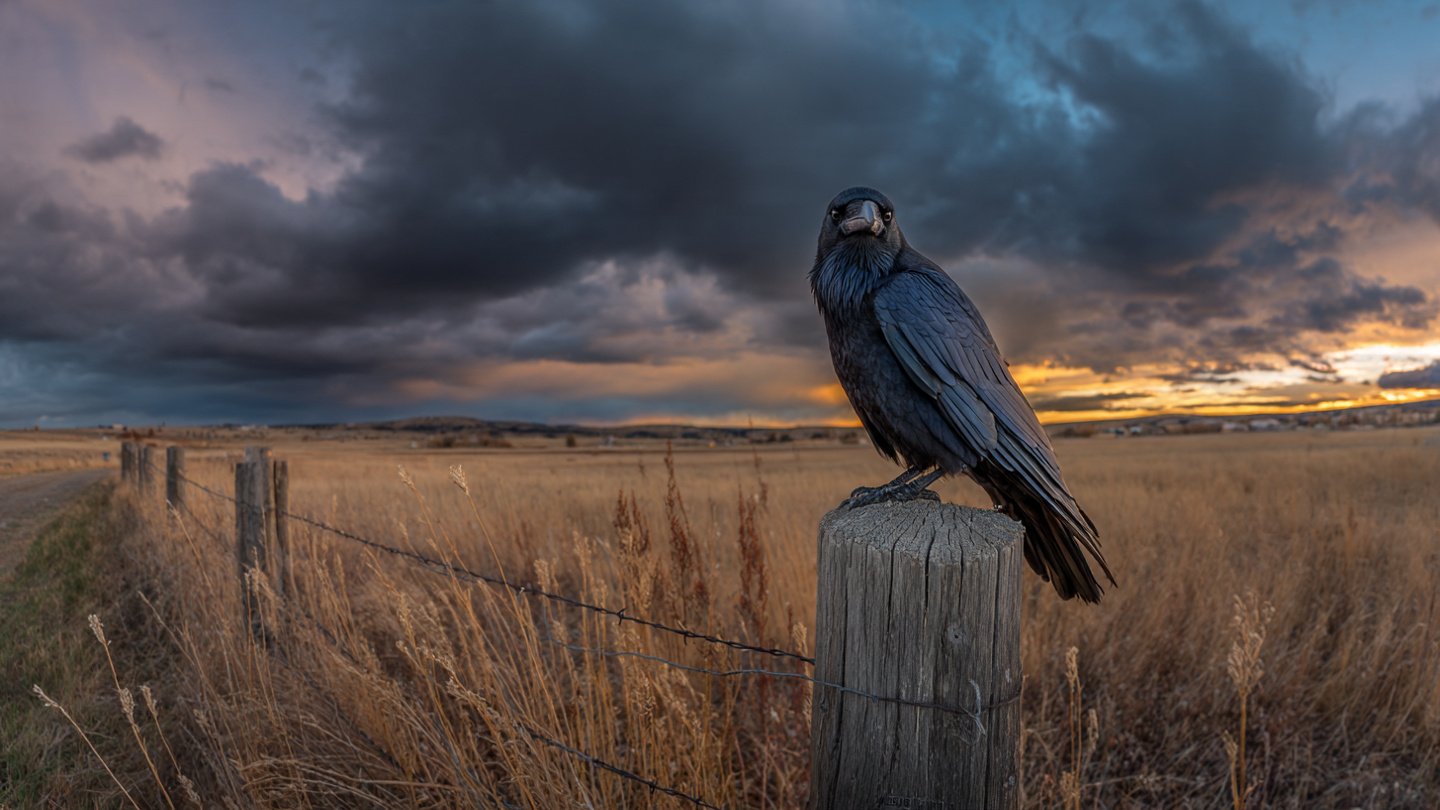
Corvidomancy: The Art of Reading Black Birds
The formal name for divination by crow or raven is corvidomancy — from the Latin corvus (raven) and the Greek manteia (divination). It is a branch of augury, the ancient practice of reading omens from birds, which the Romans formalized into a sacred priestly office. The augurs observed the direction of flight, the quality of the call, and especially the number of birds present to discern the will of the gods before any major decision of state.
But the counting tradition runs older and deeper than Rome. Long before it was written down, common folk across Britain, Ireland, and Appalachia were reading the corvids that crossed their paths each morning. Crows, ravens, rooks, blackbirds, and grackles — all black-feathered birds of the liminal spaces — carry messages if you know how to receive them.
The Counting Rhyme
The traditional British counting rhyme — most often associated with magpies, but long applied to crows and ravens as well — assigns a meaning to each number seen together. Here is the classic version, the one your grandmother's grandmother would have known:
Sorrow
A lone crow is a harbinger — something unresolved, a warning to pay attention. The old counter-charm: greet it. "Salutations, Mr. Crow." A respectful acknowledgment can turn the omen.
Joy
Two crows together signal good news arriving, a lightening of burdens, or a confirmation that you are on the right path.
A Girl
In Celtic tradition, three crows carry feminine energy — intuitive wisdom and creative potential. Three was sacred to the goddess, a number of completion and mystery.
A Boy
Four signals action, forward movement, and forthcoming news of a birth or new beginning. The energy is grounded and purposeful.
Silver
Five crows together point toward financial movement — not necessarily wealth, but resources in motion. Watch for unexpected income or an opportunity to trade.
Gold
Six is the number of abundance arriving. Not a promise, but a door open. Six crows say the season is favorable — act on what you have been waiting to begin.
A Secret Never Told
Seven crows carry hidden knowledge. Something is operating beneath the surface of what you can see. Seven asks you to be still and listen before you speak.
A Wish
Eight is the number of alignment. What you have been carrying in your heart is known. Eight crows say: your prayer has been heard. Now trust the timing.
A Kiss
Nine brings love, reunion, and tenderness. An old connection may stir, or a deepening comes to a relationship already present. Nine is intimate and warm.
A Bird You Must Not Miss
Ten crows together is the full oracle completing itself. Something significant is at hand — the kind of moment you will remember. Do not look away.
The Crow Across Traditions
No other bird carries as much spiritual weight across as many traditions as the crow and the raven. Dark-feathered, sharply intelligent, and utterly comfortable in the spaces between the living and the dead, they have served as messengers, watchers, and sacred agents across cultures that never touched each other.
- Celtic: Crows were boundary-keepers — mediators between this world and the next, sacred to the Morrigan, and often seen as incarnations of divine will, especially when they appeared in threes.
- Norse: Odin's two ravens, Huginn and Muninn — Thought and Memory — flew out each day and returned at dusk to whisper the world's news into his ear. To see a raven was to be seen in return.
- Hoodoo & Conjure: In African American folk tradition, crows are powerful watchers between worlds. Their calls and flight patterns are read as confirmation that prayers and spellwork are being actively acknowledged by the spiritual realm.
- Medieval Craft: Crows were believed to serve as familiars — and in some stories, as the witch herself, shape-shifted under cover of twilight to spy, deliver curses, or gather what was needed.
- Scripture: God commanded ravens to bring food to the prophet Elijah twice daily during the drought at Kerith (1 Kings 17:4–6). Jesus pointed to ravens in Luke 12:24 as proof of God's provision: they neither sow nor reap, yet they are fed. Noah sent a raven from the ark before the dove.
On Speaking to the Birds
There is a practice older than any written tradition: acknowledging the crow that comes to you. Not with ceremony, not with ritual — just a nod, a greeting, a word of recognition. Good morning. I see you. Thank you.
Once, I helped a blackbird that had been injured. I named him Peanut and kept him safe outside while he healed. One day he simply flew away. But now, when a blackbird lands nearby and watches me with that particular stillness — that direct, considering look — I say hello. And the communication is still there. It does not require explanation.
The birds know who has fed them. They remember the hands that helped. And if you have greeted a lone crow with respect instead of unease, you may find that it comes back. Which means you will need to start counting again.
Corvidomancy is not something you learn from a book and then practice. It is something you practice until you no longer think of it as practice. You step outside in the morning. You count what is there. You receive what is given. It is that quiet, and that old, and that reliable.
Three is the goddess at your door.
Seven is a secret the world is keeping.
Ten is the moment you have been waiting for.